Monday, February 29, 2016

Cranial Cruciate Ligament Injury: the ACL is suspected to be Torn


In day to day lives, injuries to joints, muscles, and tendons are common occurrences. Sometimes these are acute after a traumatic injury. Pain and lameness affect our ability to work or simply move around the house. In the long term, injuries can be debilitating and irreversible. Fortunately, humans can verbalize their discomfort or pain. Pets have similar issues; yet, their ability to tell us can be limited. This requires us to observe body language.

WHAT IS THE MOST COMMON INJURY LEADING TO HIND LIMB LAMENESS IN DOGS?

Cranial cruciate ligament disease.

COULD YOU BETTER DEFINE THE CRANIAL CRUCIATE LIGAMENT (ACL)?

It is the primary ligament that stabilizes the knee (stifle). As it degenerates, it leads to pain, instability, and arthritis.

IS THERE A COMMON DENOMINATOR OF OWNERS WHO PRESENT COMPLAINTS?

Lameness in one or both hind legs, that can be acute or chronic, with the affected leg being held up or in what is commonly called the “tippy toed stance." It may get worse with exercise and improve with rest. Unfortunately, it may be more difficult to diagnose if it occurs simultaneously in both rear knees at the same time. The knee is kept flexed, rotated out, and appears swollen or puffy. A pet may sit asymmetrically to protect the painful knee.

ARE THERE SIGNS THAT VETERINARIANS OBSERVE IN RADIOGRAPHS?

Yes, it has some classic radiographic presentations: swelling, joint fluid accumulation, and eventually arthritis.

IS IT TRULY AN ACUTE INJURY?

Although it can appear in many dogs acutely, more often the radiographs indicate degenerative changes meaning a silent, chronic, compensated problem is suddenly acutely exacerbated.

WHAT IS THE DIFFERENCE BETWEEN A PARTIAL AND A FULL ANTERIOR CRUCIATE LIGAMENT TEAR?

A partial tear will often appear to have more stability to the joint (less buckling or veterinarians say “lack of a drawer sign”) as in one joint the shin (tibia) sliding against the thigh(femur) bone. In either case, arthritis or degenerative joint disease can be present depending on the duration of the problem.

CAN THIS DEVELOP IN CATS?

YES, but more commonly due to trauma.

ARE THERE CERTAIN DOG BREEDS AT RISK?

In dogs, it is more common in large breeds: Rottweilers, Labrador Retrievers, Newfoundlands, Boxers, Golden Retrievers. However, it can occur in any dog.

WHAT ARE THE RISK FACTORS?

Obesity, inactivity, over activity, trauma, medical conditions that weaken joints/immune system, confirmation, collagen degeneration, and genetics of the breeds mentioned above.

DOES NEUTERING AN ANIMAL INCREASE THE RISK?

There is controversy in how much is lifestyle versus the hormonal protection from remaining intact male (not neutered).

ARE THER OTHER DISEASES THAT CAN LOOK SIMILAR?

Slips or patella (knee cap) luxation, hip dysplasia, lower spine or lumbar-sacral degeneration, bone tumors, sprain of groin muscles (Iliopsoas strain), infectious joint disease, immune mediated disease, and torn meniscus can look similar. In cases where both knees are involved, the weakness can mimic a neurological disorder.

DISCUSS THE RECOMMENDED TESTING?

After the physical exam, bloodwork, radiographs, and possible testing for infectious diseases are the most common. Occasionally joint taps will be recommended.

NORMAL RIGHT KNEE


ABNORMAL KNEE


WHAT ARE THE ACUTE MANAGEMENT TOOLS?

Pain medications (NSAIDS), reduced food intake, and exercise restriction for a month. Fifty percent of dogs under 30 pounds and most cats will return to full function with rest, while only 20% of large dogs will be okay without surgery.


ARE THERE SURGICAL TREATMENTS?

Surgical management is considered the standard of care with an 85% success rate. The results can vary based on the age of the pet, weight, and degree of pre-existing arthritic changes. No single treatment is felt to be superior. 

There are 3 main types.

1. Intra-articular (within the joint) surgery to create a new ligament.

2. Extracapsular (outside the joint).

3. Biomechanical surgery that changes the angles of the knee. Examples include tibial plateau-leveling osteotomy(TPLO) and tibial tuberosity advancement(TTA).

 Newer, experimental treatments investigate the use of stem cell implants.


IS THERE FOLLOW-UP CARE?

Weight loss, pain medications, REST for eight to 10 weeks, followed by an incremental increase in exercise levels (rehabilitation), and monitoring for relapse of use of the leg(limping), infection, or pain. 


Betsy T. Sigmon, DVM, Diplomate American Board of Veterinary PractitionersCreature Comforts Animal Hospital
Cary,NC

Thursday, February 11, 2016

Staphylococcal bacterial skin infections, Methicillin Resistant Staph, and New Skin Treatments


While attending one of the largest veterinary conferences in the world, a few glaring and concerning facts were presented about the state of antibiotics in the human and veterinary worlds. One of the most common challenges I have faced each day in the last 10 years has been Staphylococcal skin infections obtained after scratching or itching. Recently, it has been noted that many of these infections have become resistant in cultures to some of the more commonly prescribed oral and injectable antibiotics. 
WHY HAS ANTIBIOTIC PRODUCTION DECREASED 75% since 1983 IN THE USA?
There is not a lot of profit behind the development of new, occasional-use antibiotics versus the daily use of cholesterol lowering drugs (statins) that people take each day. Government agency guidelines recommend antibiotic use to be limited to only to severe cases, and that limits the ability of manufacturers to recoup costs. Used appropriately, antibiotics should be used for specific, targeted, bacterial infections and for a short period of time. 
 WHAT IS THE DIFFRENCE BETWEEN THE STAPHYLOCCOCAL DRUG-RESISTANT SKIN INFECTIONS OF PEOPLE VERSUS THOSE IN DOGS?
Dogs have Methicillin-Resistant Staphylococcal Pseudintermedius (MRSP) and people have Methicillin-Resistant Staphylococcal Aureus (MRSA). They are not felt to be of  concern in cross infections unless an individual is going through chemotherapy, incurs severe bite wounds, or has a compromised immune system. MRSP was first noted in North America in 1999 and MRSA in 1961.
ARE THERE SOME CLASSICAL SIGNS OF STAPH SKIN INFECTIONS IN DOGS?
They often look like circular lesions, similar to that expected with fungal infections (ringworm).  Some are itchy; others start as a pimple (infected hair follicle) then spread out like the ripple created when a pebble hits a pond.

TOPICAL THERAPY IS REALLY BEING PUSHED IN THE TREATMENT OF SURFACE INFECTIONS. 
One of the biggest reasons for topical antiseptic therapy is because there has been no drug resistance reported to date. In the past they were considered adjunct treatments (used in addition). Now they are being recommended instead of antibiotics (except in extreme cases) since there are no new antibiotics for skin infections currently available. Topicals can kill even highly antibiotic-resistant bacterial strains. They must initially be applied daily.  Below is a picture of the Staphylococcal  groin infection (featured at right) at 2.5 weeks post treatment with topical therapy alone. 

NAME SOME EXAMPLES OF TOPICAL ANTIBACTERIAL PRODUCTS. Alternative ones?
Douxo Chorihexiderm shampoo, spray, mousse are excellent products. Others are using malaket anti-septic wipes,
mupirocin cream, and a novel product from the dairy industry to disinfect udders, Preva wipes. 

YOU MENTIONED PREVA WIPES. WHAT MAKES THEIR TOPICAL USE UNIQUE COMPARED TO OTHER WIPES?
From Bayer Animal Health, they are unique in that they contain Nisin, a naturally derived antimicrobial from Lactococcus lactis. It is a 6x8 inch wipe and is utilized as an adjunct, in-between treatment to shampoos and topical leave-on antiseptics.
HOW OFTEN WILL THE TOPICAL ANTISEPTIC SPRAYS, LOTIONS, OR LEAVE-ON MOUSSE NEED TO BE APPLIED TO INFECTED SKIN AREAS?
Daily topical skin application is required until healed. Then once-a-week application is necessary.
IS THERE A WAY OWNERS KNOW THE SKIN INFECTION HAS DRUG RESISTANCE AND MAY STILL NEED ORAL ANTIBIOTICS?
A skin culture. 
WHY ARE ESSENTIAL FATTY ACIDS SUCH AS FISH OIL PRESCRIBED?
It is believed they have weak anti-inflammatory effects and may help boosts the outer skin layer function (epidermal barrier). In addition, this may lower the dose of oral anti-histamines and steroids due to lower itching. 
THERE IS A LOT ONLINE ABOUT EPIDERMAL BARRIER FUNCTION AND TOPICAL PIPETTE PRODUCTS SUCH AS DOUXO ANTI-SEBORRHEIC OR THE ALLERDERM LINE. HOW IS THIS SPECULATED TO WORK?
Topical lipid emulsion preparations may normalize the outer skin barrier and inflammatory leaking between cells of the epidermis that perpetuate itching, odor, and secondary infections due to allergies.

ARE THERE ANY OTHER FACTORS THAT INCREASE THE RISK OF DRUG RESISTANT SKIN INFECTIONS?
Hospitalization, surgery, prior antibiotic use in the last 30 days, or the repetitive use of antibiotics. 
IS THERE A BIG LESSON HERE?
When possible, perform a cytology for yeast and bacteria, a skin scrape for mange, and  fungal cultures for any significant skin infections. In repetitive infections, culture the skin and look for underlying causes.  Washing your hands several times a day and pets once a week is also an excellent recommendation.
New treatments such as probiotics to create healthy bacterial environments that overgrow the bad bacteria and the research of viruses that kill bacteria (phages) are on the horizon.  Some guidelines are noted in hwww.wormsandgermsblog.com/files/2008/03/vde121181.pdf
HOW SERIOUS ARE DRUG-RESISTANT INFECTIONS IN THE USA?
The CDC reports a minimum of 23,000 people die each year as a direct result.  100,000 die from related complications.  Two million people contract such infections each year. Yet, over half of the antibiotics prescribed are considered unnecessary. In summary, drug- resistant bacteria and viruses are considered the sixth leading cause of death in the USA, and the numbers are rising. 

Betsy T. Sigmon, DVM, Diplomate ABVP, Canine & Feline
Hospital Director
Creature Comforts Animal Hospital
Cary, NC

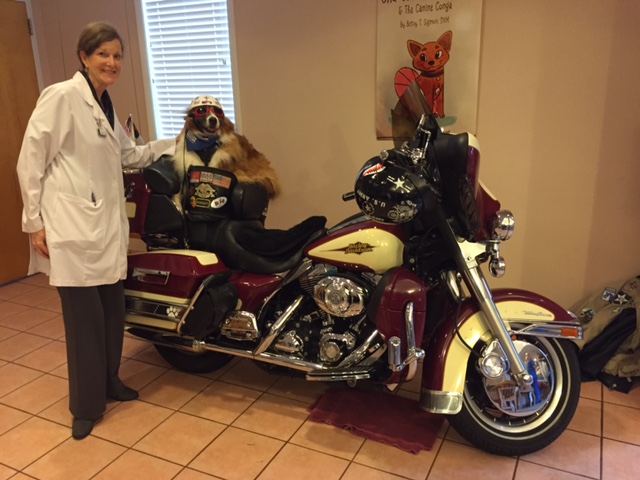
BIG VAROOM FOR RAY PRICE HARLEY DAVIDSON AND BIKER BOOT CAMP YESTERDAY. In addition, special thanks to Ms. Ray Price for her hospitality and the courteous treatment of all attendees by her employees. 


Yes it is winter in all its glorious beauty!


Thursday, January 21, 2016

Urine Leakage: A form of Canine Post-Menopause

As in a variety of professions, veterinarians are required to obtain a certain number of continuing education hours per year to maintain their license. I traveled to Orlando, Florida to attend one of the largest veterinary conferences in the world, the NAVC.   Upon arrival, I drove with a friend to see Cape Canaveral.


One of the more notable keynote speakers at the conference was Bert Jacobs, co-founder and Chief Executive Optimist of the Life is Good, Inc. t-shirt fame.

He combined innovative business lessons, humor, and inspirational stories to tell the saga of working with his brother to go from $78 to $100,000,000 in retail sales. Even more powerful was his promotion of corporate responsibility as a positive and moral obligation of capitalism or simply the right thing to do.


 In the evening was a concert with singer & activist, Sheryl Crow: talented song writer, cancer survivor, and accomplished musician. Her accolades include the selling of over 35 million records.


One interesting lecture pertained to urine leakage in dogs that often leads to very unhappy owners, odor, and risk of infections.


PLEASE DEFINE URINARY INCONTINENCE!

It is the loss of voluntary control of urination, especially when a pet has been resting or is relaxed. Often the most obvious first symptom is a wet spot on the dog's bed or floor after the dog has laid there. Sometimes prolonged contact with the urine irritates the skin around the vulva, causing redness and a rash (urine scald). The dog will lick at the area, which can make the rash even worse.


Your dog has no sensation of the urination occurring, and the urine leakage does NOT indicate a desire on the dog's part to annoy, take revenge, or otherwise deliberately urinate.

WHAT CAUSES URINE LEAKAGE INCONTINENCE IN DOGS?

Once infections, stones, and tumors have been eliminated, most are due to incomplete function of the exit point of urine from the bladder called the urethral sphincter or USMI (urethral sphincter mechanism incompetence).

Ninety percent are spayed females associated with a deficiency of estrogen as in post-menopausal women as early 10 months after the spay.


ARE THERE SOME COMMON DENOMINATORS?

Dogs with this issue tend to leak urine only when at rest, laying down, or sleeping. Unlike in urinary tract infections they do NOT: urinate more frequently, have no blood in the urine, produce a normal volume of urine, and do not have an increase in thirst.

ARE THERE SOME COMPLICATING FACTORS?

·         Bladder infections, stones, polyps, or tumors

·        Very dilute, high volume urine that overflows the bladder outlets with hormonal conditions such as conditions that causes a dog to drink excessively such as Diabetes Mellitus and Cushing’s disease.

·         Nerve damage to the bladder due to inappropriate innervation from the spinal cord

·        Anatomical or congenital malformations in the “plumbing” with conditions called ectopic ureters, vaginal strictures,  or pelvic bladder.

HOW IS CANINE INCONTINENCE DIAGNOSED?

-        Blood work, urinalysis, and a urine culture (should be within normal limits)

-     Depending on the gender and age of your dog, additional testing such as abdominal x-rays or an ultrasound (Leakage is rarely seen in male dog so they need to be evaluated carefully for urethral, bladder, and prostatic disease).

-    Older dogs need to be screened thoroughly for bladder cancer.

-   Male or female dogs who develop incontinence at less than one year of age should always be evaluated for developmental abnormalities.


WHY ARE SPAYED FEMALE DOGS AT RISK?

Muscle strength in the bladder sphincter(valve) is toned by estrogen. When dogs are spayed approximately 20% of spayed female dogs with develop leakage within 3 yrs of being spayed. It is more common in large dogs rather than small dogs.


 HOW IS URINARY INCONTINENCE DUE TO SUSPECT INSUFFICIENT HORMONAL LEVELS TREATED?

ESTROGEN PRODUCTS:   50 to 60% of incontinent spayed female dogs will respond.
     
1. Incurin (Estridiol) is a new, estrogen therapy option and the only one labedl FDA approved for use in dogs.

2.DES

3. Premarin

NON-HORMONAL PRODUCTS

1.   Phenylpropanolamine (Proin), a non-hormonal medication that also helps to improve bladder control daily to three times a day, especially at bedtime. It is sometimes combined with one of the above.

WHAT ABOUT TREATING MALE DOGS?

In some male dogs if DES or Proin fails, testosterone cypionate is administered once at 2.2mg/kg once, and it may be repeated every four to six weeks. Special application (handled as a controlled substance) as well as watching for signs of aggression and prostatic enlargement are two things that should be monitored.

IF THE MEDICATIONS FAIL TO CONTROL THE LEAKAGE, ARE THERE OPTIONS?

Collagen or bulking injections around the bladder opening ( urethral sphincter), surgical implantation of a urethral occluder device, and certain bladder/urethral tacking surgeries are available.  While some of these therapies have proven themselves successful, these techniques will not necessarily provide lifelong control, and a combination of surgical and medical options are often used for the best outcome.


Betsy T Sigmon, DVM, Diplomate ABVP Canine & Feline

Creature Comforts Animal Hospital

Cary, NC

Thursday, January 14, 2016

RADIOGRAPHS (X-RAYS) AT CREATURE COMFORTS ANIMAL HOSPITAL

The Creature Comforts Animal Hospital team had their first annual kid’s vet camp yesterday.


Sixteen participants met Chewy and his motorcycle  riding owner, Butch.

and listened to Dr. Sigmon read her new book Cha Cha Chocobelle and the Canine Conga.


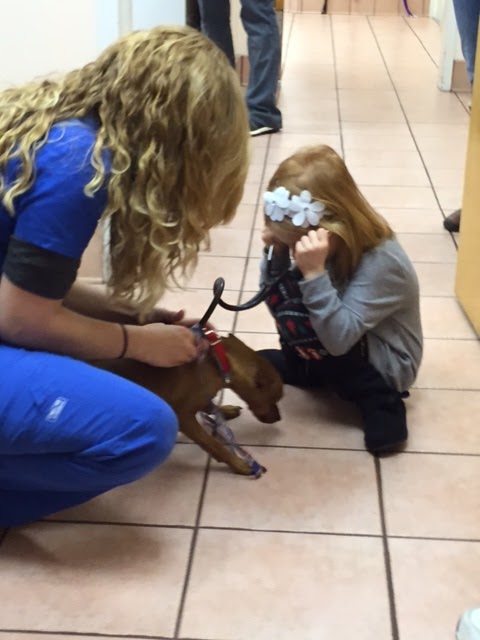
After listening to normal and abnormal heart sounds, the participants with their parents stepped into the role of being Jr. Veterinarians. IN FOUR EXAMINATION rooms with CCAH client/pet parents, the doctors-in-training auscultated each dog’s heart and gave their “expert opinion."


There was one dog of the 4 with an abnormal heart sound (murmur).

In addition, during the 1.5-hour session, they witnessed the steps and procedures in acupuncture, surgery, dentistry, dental radiographs, and ear scoping (otoscopy) for pets with painful ears.


Often clients present their pets for vague signs of limping, coughing, pain, not pooping, and not eating. One of the tools we utilize is radiology (x-rays). So for a different blog approach, I present a mini-vet camp for my followers at home to see if the abnormality can be detected.

HOW ARE RADIOGRAPHS TAKEN AND REVIEWED?

In the old days, a film was exposed (similar to a camera) and then taken out of a cassette, sent through a film processor in a dark room, then dried for review.  Now, the films are digital, meaning the results are available within 2 to 4 seconds and can be sent to boarded radiologists (specialists in the field) or anywhere in the world via the internet.


AS A CLIENT, HOW MAY I VIEW THE RADIOGRAPHS TAKEN OF MY PET AT HOME?

For clients wishing a limited time view of their pet's digital films from home:
1.    go to Internet Explorer or your other compatible Internet browser
2.    go to www.DVMInsight.com
3.    the user name is CCAHCAREY_guest
4.    the password is guest (note must use lower case as directed)
5.    fill in the Exam # that you were issued    Ex #1184868, (If not sent to you, please let us know)
6.    click on viewer

NOW FOR SOME PRACTICE, SEE IF YOU CAN PICK THE ABNORMALITY VS THE NORMAL IN THE BELOW VIEWS OF THE CHEST OF A DOG?

NORMAL


METASTATIC LUNG CANCER ( see the snow storm look in the lung fields)


2 TUMORS IN THE CHEST OF THE BELOW PATIENT


MOVING ONWARD, COMPARE THE NORMAL WITH THE ABNORMAL RADIOGRAPHS OF THE BELLY.

NORMAL BELLY X-RAY


SEVERE CONSTIPATION WITH COLON FULL OF POOP


ATHLETIC SOCK IN THE STOMACH


ATHLETIC SOCK IN THE SMALL INTESTINES OF THE BELLY


CANCER IN THE SPLEEN OF A DOG

WHAT DO YOU DO WHEN YOU ARE UNCERTAIN IF THERE IS A BLOCKAGE?
In the old days we would have dogs swallow a chalk-like liquid called barium. Now we have a newly added  tool called infrasound to aide in diagnostics.


FINALLY, BONE & JOINT PROBLEMS ARE VERY COMMON, OF WHICH MANY DOGS ARE SILENT. IN THE FOCUS OF THE BELOW VIEWS, SEE IF YOU CAN DIAGNOSE THE BELOW.

RELATIVELY NORMAL HIPS ON MY OWN DOG, TACO BELLE


DISLOCATED HIP ON A SMALL DOG


Severe arthritis (HIP DYSPLASIA) on a dog


Many thanks to volunteers, staff,  and clients of Creature Comforts Animal Hospital for their help in giving kids in the Cary community the chance to share our passion for the care and wellbeing of our pets.


In addition, a special mention to Amy and Kris from Ray Price Harley-Davidson for their participation, gifts, and connecting CCAH to Butch and his dog Chewy. For more information on the story of Chewy, visit www.bikerdoggie.com


Betsy T. Sigmon, DVM, Diplomate American Board of Veterinary Practitioners, Canine & Feline

Creature Comforts Animal Hospital

Cary, NC 27511