Thursday, January 14, 2016

RADIOGRAPHS (X-RAYS) AT CREATURE COMFORTS ANIMAL HOSPITAL

The Creature Comforts Animal Hospital team had their first annual kid’s vet camp yesterday.


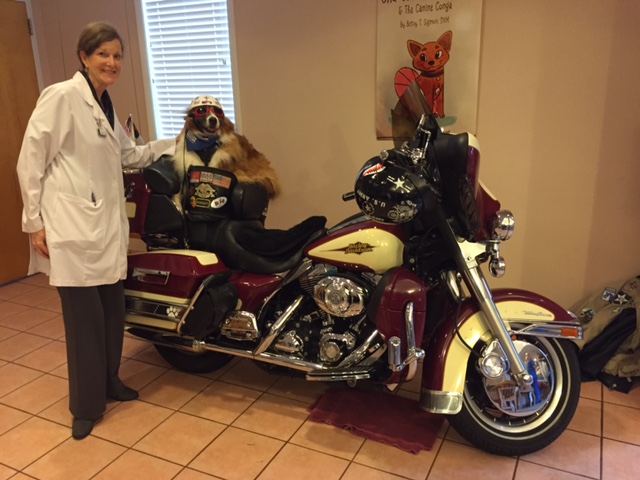
Sixteen participants met Chewy and his motorcycle  riding owner, Butch.

and listened to Dr. Sigmon read her new book Cha Cha Chocobelle and the Canine Conga.


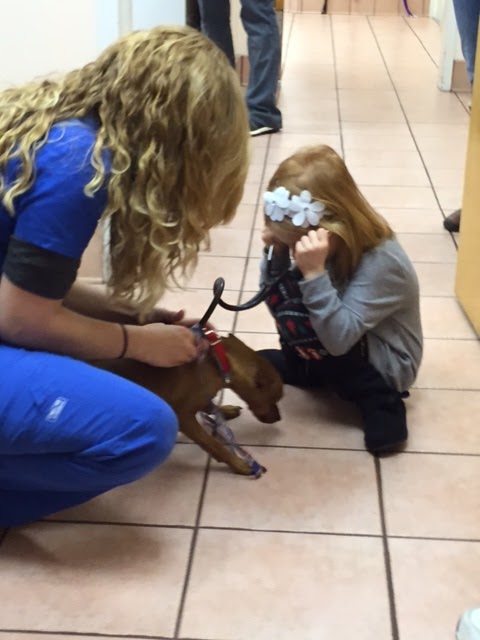
After listening to normal and abnormal heart sounds, the participants with their parents stepped into the role of being Jr. Veterinarians. IN FOUR EXAMINATION rooms with CCAH client/pet parents, the doctors-in-training auscultated each dog’s heart and gave their “expert opinion."


There was one dog of the 4 with an abnormal heart sound (murmur).

In addition, during the 1.5-hour session, they witnessed the steps and procedures in acupuncture, surgery, dentistry, dental radiographs, and ear scoping (otoscopy) for pets with painful ears.

Often clients present their pets for vague signs of limping, coughing, pain, not pooping, and not eating. One of the tools we utilize is radiology (x-rays). So for a different blog approach, I present a mini-vet camp for my followers at home to see if the abnormality can be detected.

HOW ARE RADIOGRAPHS TAKEN AND REVIEWED?

In the old days, a film was exposed (similar to a camera) and then taken out of a cassette, sent through a film processor in a dark room, then dried for review.  Now, the films are digital, meaning the results are available within 2 to 4 seconds and can be sent to boarded radiologists (specialists in the field) or anywhere in the world via the internet.


AS A CLIENT, HOW MAY I VIEW THE RADIOGRAPHS TAKEN OF MY PET AT HOME?

For clients wishing a limited time view of their pet's digital films from home:
1.    go to Internet Explorer or your other compatible Internet browser
2.    go to www.DVMInsight.com
3.    the user name is CCAHCAREY_guest
4.    the password is guest (note must use lower case as directed)
5.    fill in the Exam # that you were issued    Ex #1184868, (If not sent to you, please let us know)
6.    click on viewer

NOW FOR SOME PRACTICE, SEE IF YOU CAN PICK THE ABNORMALITY VS THE NORMAL IN THE BELOW VIEWS OF THE CHEST OF A DOG?

NORMAL


METASTATIC LUNG CANCER ( see the snow storm look in the lung fields)


2 TUMORS IN THE CHEST OF THE BELOW PATIENT


MOVING ONWARD, COMPARE THE NORMAL WITH THE ABNORMAL RADIOGRAPHS OF THE BELLY.

NORMAL BELLY X-RAY


SEVERE CONSTIPATION WITH COLON FULL OF POOP


ATHLETIC SOCK IN THE STOMACH


ATHLETIC SOCK IN THE SMALL INTESTINES OF THE BELLY


CANCER IN THE SPLEEN OF A DOG

WHAT DO YOU DO WHEN YOU ARE UNCERTAIN IF THERE IS A BLOCKAGE?
In the old days we would have dogs swallow a chalk-like liquid called barium. Now we have a newly added  tool called infrasound to aide in diagnostics.


FINALLY, BONE & JOINT PROBLEMS ARE VERY COMMON, OF WHICH MANY DOGS ARE SILENT. IN THE FOCUS OF THE BELOW VIEWS, SEE IF YOU CAN DIAGNOSE THE BELOW.

RELATIVELY NORMAL HIPS ON MY OWN DOG, TACO BELLE


DISLOCATED HIP ON A SMALL DOG


Severe arthritis (HIP DYSPLASIA) on a dog


Many thanks to volunteers, staff,  and clients of Creature Comforts Animal Hospital for their help in giving kids in the Cary community the chance to share our passion for the care and wellbeing of our pets.


In addition, a special mention to Amy and Kris from Ray Price Harley-Davidson for their participation, gifts, and connecting CCAH to Butch and his dog Chewy. For more information on the story of Chewy, visit www.bikerdoggie.com


Betsy T. Sigmon, DVM, Diplomate American Board of Veterinary Practitioners, Canine & Feline

Creature Comforts Animal Hospital

Cary, NC 27511

Wednesday, December 30, 2015

THYROID CONDITIONS IN PETS


During the holiday season overindulgence in food can lead to the bathroom scales suggesting a Jenny Craig or Weight Watchers critical list patient. In pets, mild to severe swings in weight can be to a variety of reasons: overeating, under eating, lack of exercise, and metabolism issues. One common condition involves the hormones of the thyroid gland.

WHAT IS THE MOST COMMON THYROID CONDITION IN CATS? SIGNS?

Hyperthyroidism, an overactive thyroid condition due most commonly to a benign thyroid tumor. Signs include one or more of the following: weight loss, increase in thirst & urination, hyperactivity, racing heart, change in personality, vomiting, and diarrhea.image.jpeg


How is it diagnosed? At what age?

A blood test where a thyroid level T4 is measured. Typically the condition is first seen in middle-aged cats.

Do owners have more than one option for treatment?

Yes. Oral medication for life (methimazole), surgery to remove offending gland, and a one-time radioactive iodine injection that cures the patient in most cases.

Are there risks with lack of treatment?

Yes, severe weight loss, heart conditions, and death.

WHAT IS THE MOST COMMON THYROID CONDITION IN DOGS? WHAT ARE THE SIGNS?

Hypothyroidism, an under-active thyroid condition. Signs include one or more of the following: weight gain, sleeping more, dull coat, symmetrical hair loss, seeking warm places, and thickened/darkened skin.  Occasionally facial paralysis of one side of the face is noted called Bell’s Palsy.


HOW is it diagnosed? At what age?

Blood test to measure thyroid levels of T4, Ft4 by equilibrium dialysis, and occasionally thyroid stimulating hormone levels. Patients on certain medications may have falsely low thyroid levels and that must be taken into account.  Typically middle-aged dogs develop the condition, although it has been seen as early as three years of age at this practice.

Are there any breeds of dogs that seem more at risk?

Golden Retrievers and Doberman Pinchers


What is the treatment for hypothyroidism in dogs?

Levothyroxine that replaces missing hormone


Betsy Sigmon, DVM, Diplomate American Board of Veterinary Practitioners, Canine & Feline

Creature Comforts Animal Hospital

Cary, NC


NC Chinese Lantern Festival

For interesting and inexpensive ways to create  toys for cats visit
https://www.purinaone.com/cats/enrich-feeding-time-for-your-cat-make-a-puzzle-feeder


In addition:
An empty box with or without a ball, toy, or catnip
Ping pong ball in an empty tissue box or bath tub
Paper bags


Sunday, December 13, 2015

Pain Management: The Creature Comforts Difference

This past weekend, I took a road trip to Richmond and Williamsburg, Virginia to see an exhibit at the Virginia Museum of Fine Arts, stroll the light show in the Lewis Ginter Botanical Gardens, 


participate in the “Tacky Christmas House Tour”,
visit Yorktown, and walk the streets of Colonial Williamsburg. 

Although I missed the Grand Illumination in Williamsburg that occurs the first Sunday in December, there were plenty of other beautiful and fun sightings.
My biggest question was which direction to go home?  I elected to take the Jamestown Ferry home via the Courtland, Virginia route. 
It brings to mind the many directions to approach pain. What is time tested versus new?

WHAT IS PAIN?
Pain is an unpleasant and emotional experience associated with actual or potential tissue damage. Pain is a constant concern of all pet owners during any dental, medical, or surgical procedure, as well as for age-related conditions.  In simple terms, it HURTS! As a member of the International Veterinary Academy of Pain Management, Dr. Sigmon’s objective is to promote the interdisciplinary approach to animal pain management by WORKING with experts all over the country in the area of pain management. 

SINCE PETS CANNOT SPEAK FOR THEMSELVES AND RARELY VOCALIZE PAINFUL CONDTIONS AT HOME, HOW DOES AN OWNER RECOGNIZE SIGNS OF PAIN?
Hiding, not eating, curled up in a corner, stiffness on rising, difficulty posturing to urinate/defecate, and guarding the back, abdomen, or limbs. In dental disease, rubbing the mouth, drooling, and dropping of FOOD are among those on a checklist that CCAH utilizes.
Creature Comforts offers the following options to lower pain.

SURGICAL AND DENTAL PRE-EMPTIVE PAIN CONTROL
_____Lidocaine gel patch 20 minutes prior to catheter placement
_____ Pre-surgical, Pre-dental pain medications tailored to your pet’s needs and thus decreasing depth of anesthesia as much as 20%
____Pre-emptive(interventional) pain medications during surgical procedure
____ Local blocks of surgical sites to further decrease depth of surgical requirements
____Injectable pain meds post operatively to allow your special pet to “snooze” or rest post-operatively
____ Oral pain medications dispensed and discussed at discharge 

WHAT ARE SOME OF THE NEWER COMBINATIONS++ OF ORAL PAIN MEDS FOR DOGS?
1.      NSAIDS- rimadyl, previcox, and metacam (or generics) 
2.      GABAPENTIN (also for nerve pain, seizures) – may take up to 2 weeks to be effective
3.      AMANTADINE (also for Parkinson’s disease) 
++ Multi-modality (many different combinations) of pain medications using recommendations and recent developments of experts from veterinary research facilities
ARE THERE SOME HOLISTIC OPTIONS?
_____Diet management (ROYAL CANIN MOBILITY DIET) and weight control (cut intake 1/3rd & add veggies)
_____ Omega 3 fatty acids 1000 TO 2000 MG PER 20 LBS, START SLOW
_____ joint supplementations injectable (Adequan)
_____ Dasuquin, Cosequin, oral, natural joint supplements
____ Rehabilitation, physical therapy-written plan, not just free play in back yard
____Acupuncture
____Herbal supplements

HOW MANY LONG TERM PAIN MEDICATIONS ARE APPROVED IN THE UNITED STATES FOR CATS?
ZERO. Currently all pain medications for cats used long term are considered extra-label usage.

 WHAT’S NEW ON THE HORIZON FOR PAIN MANAGEMENT IN 2015?

______Prozac
______Elavil or Clomicalm (medications prescribed for depression & anxiety)
______Capsaicin (think Liquid Heat home remedy)
______Resveratrol in red wine and how much pain control is new study
______Minocycline antibiotics
______Steroids

_____Tanezumab ( utilizes the immune system via monoclonal antibodies to attack a mediator of pain- nerve growth factor) – not on market , allowed 6 weeks of pain control from a single injection
_____Aratana –grapiprant
____Fentanyl patch or gel-Recuvyra fentanyl gel lasts 4 days (keep away from children
____Exparel (liposome encapsulated) and lasts 72 hours

Betsy T. Sigmon, DVM, Diplomate American Board of Veterinary Practitioners, Canine & Feline
Creature Comforts Animal Hospital
Cary, NC
Many thanks to Memphis Woodall's family for the holiday photos. Below are some of the door decorations from Colonial Williamsburg.


Wednesday, November 25, 2015

SNEEZING CATS: HERPES VIRUS INFECTIONS

I am back from Kanas City to see the son of a Kernersville friend win with his horse at the American Royal Horse Show. In addition, I saw a parade horse class similar to that seen in the Tournament of Roses Parade, traveled to see President Harry Truman’s home place & library,


witnessed a Sicilian donkey race,


and had a private tour of one-hundred-year old mansion decorated by the same group out of NYC that did the Vanderbilt mansions. As a side trip I went to see a Museum of Natural History touring exhibit on the horse at the Prairie Fire Museum in Overland Park, Kansas


and visit a coffee roaster that had a DC-3 as their symbol on the top of the building.


All were very cool stuff!


My only complaint was the dry air caused a lot of sinus irritation and nose bleeds. It took several days to return to normal. Unfortunately, many of my kitty patients do not have such short courses of sinus discharge and sneezing.

WHAT IS THE MOST COMMON COMPLAINT IN NEWLY OBTAINED CATS OR KITTENS FROM RESCUE GROUPS, HUMANE SOCIETIES, FERAL COLONIES, OR OTHER FACILITIES INHABITED BY LARGE NUMBERS OF CATS?


Discomfort associated with crusty/snotty noses and weepy/red eyes. These problems are commonly ASSOCIATED with viral Herpes upper respiratory infections(URI). Often they develop secondary opportunistic bacterial infections. Herpes viruses are mainly life threatening in weak kittens that stop eating or develop secondary pneumonia. Other signs may include any combination of the following.

• Sneezing “attacks”

• Eye ulcers

• Fever (NORMAL IS 101 TO 102.8F)

• Loss of appetite (loss of sense of smell)

• Drooling

• Squinting

HOW DOES HERPES VIRUS INFECT CATS?

The virus invades the nose, eyes, sinus, throat, mouth and tonsils of a cat which causes inflammation and fever. This is life threatening in kittens.


ARE FELINE HERPES VIRUS CONTAGIOUS TO OTHER CATS? PEOPLE? DOGS?

Yes, they are highly contagious (shared litter boxes, grooming), so it is always wise to isolate a cat under treatment, and to feed and water your sick kitty separately in multi-cat households. Even with careful isolation, because the stress factor (ex. Neutering), relapses are common. These problems usually resolve within a few weeks of good care but some cases linger and continue to shed for months.

It is not contagious to humans and dogs.

HOW IS IT DIAGNOSED?

Most commonly by signs as viral isolation is reserved for more persistent cases.

DO VACCINES PREVENT THE VIRAL HERPES INFECTION?

There are vaccines, however, most kittens are already infected with the herpes (rhinotracheitis) before they leave their mothers. Immunizations do not prevent infection, rather they lower the severity of the infection.


ARE SOME CATS PERMANENTLY INFECTED AND PERSISTENT SHEDDERS OF THE HERPES VIRUS?

Yes, once infected, the virus remains in a cat’s body for the rest of their life.


WHAT ARE SOME OF THE MOST COMMON TREATMENTS?

Supportive care as there are no cures for viruses, only the secondary bacterial infections. Some will remain infected the remainder of their lives. Treatment of the eye infections with topical medications is critical, especially if painful corneal eye ulcers (herpetic ulcers). Flare ups of herpes virus can return with the stress of boarding, changes in the house routine, and other illnesses. Here are some additional approaches to care:


• Keeping the nostrils and eyes clear of discharges. Use cotton balls dipped in warm water to wipe away any discharge.

• Antibiotics may be prescribed, but these are ineffective against the herpes virus, but may be used to treat secondary infections that can occur.

• Antiviral drugs: Famcyclovir, anti-nausea drugs: Cerenia

• Ensuring the cat is receiving food and liquid intake. Force feeding, IV fluids or sub cutaneous fluids if necessary.

• L-Lysine is an essential amino acid which has been shown to suppress viral replication.

• Intranasal vaccine 2 to 3 times a year

• Human alpha 2b interferon

• Probiotics

• Zyrtec once a day as an anti-histamine


Dr. Betsy T. Sigmon, Diplomate American Board of Veterinary Practitioners, Canine & Feline

Creature Comforts Animal Hospital

Cary, NC


Many thanks for the kind works, and many purchases of the new children’s book, CHA CHA Chacobelle and the Canine Conga. Let me know if you would like me to do a reading at your elementary school or library.


I have learned in the presentation last Thursday at West Lake Elementary School that when you imply that every child has a gift, do not be surprised if the ask “where is our present” at the end of the reading. I think next time I will substitute the word “talent” for gift.


Here is the link to an electronic version of the article
http://www.newsobserver.com/news/local/community/cary-news/article42609009.html


Fall night at dusk over Dutchman Down Lake area